
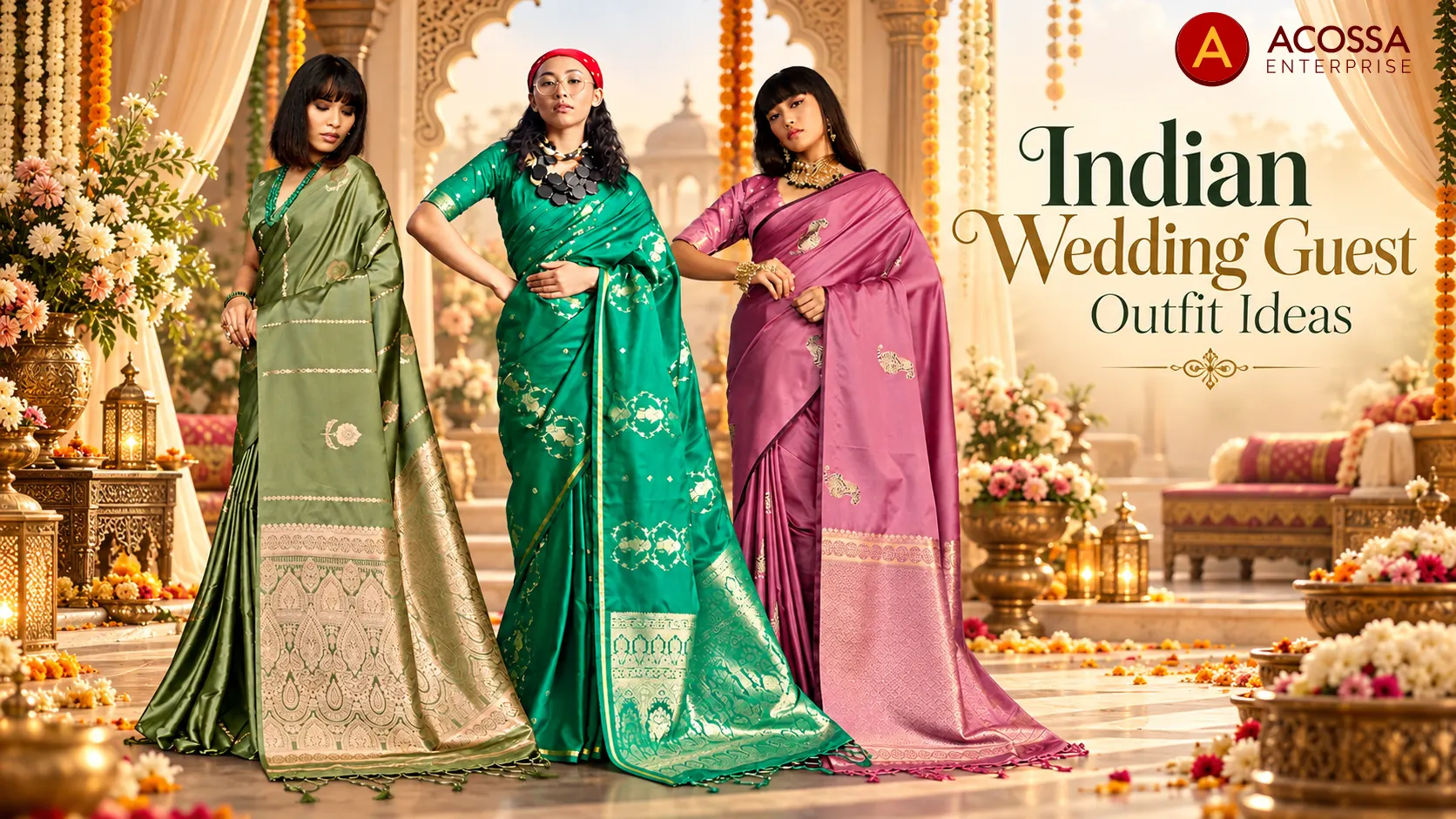
Indian Wedding Guest Outfit Ideas for Different Dress Codes
Few invitations create as much outfit anxiety as an Indian wedding card. Celebrations can last several days, each event has its own mood, and the dress code is rarely spelt out clearly. “Festive,” “traditional” or “dressy” can mean very different things to different families, and at different times.
This guide features Indian wedding guest attire for every level of formality, from a relaxed daytime wedding to a black-tie reception. Whether you are selecting a saree, a lehenga, a salwar suit or a gown, you will find practical ideas on colours, fabrics, embellishment, accessories and comfort. There’s also a section for USA, UK and Canada guests attending a wedding in India or shopping for one from abroad.
How to Read an Indian Wedding Dress Code
Dress expectations are guidelines, not laws. Before you buy anything, look at these clues:
The invitation wording. Terms like “traditional attire,” “Indian formal,” “festive,” “cocktail” or “Indo-western” tell you the general direction. Some invitations include a color palette or a “colors to avoid” note.
The family and community. Customs differ widely between Punjabi, Gujarati, Bengali, Tamil, Marwari, Muslim, Christian, Sikh and interfaith weddings, and between families within the same community.
The region and climate. A summer wedding in Rajasthan calls for different fabrics than a winter reception in Delhi or an evening ceremony in Kerala.
The venue. A heritage palace, a beach resort, a temple, a banquet hall and a garden lawn each suggest different silhouettes and footwear.
The time of day. Daytime events usually suit lighter colors and lighter embellishment. Evening events welcome richer fabrics and more sparkle.
If you are unsure, it is perfectly fine to ask the hosts or a close relative. Most families appreciate the question.
Mauve Pink Saree with Gold Woven Pallu
Indian Wedding Guest Outfits by Dress Code
Traditional Dress Code
A traditional dress code is common for religious ceremonies and in families that prefer classic ethnic wear. Think modest, elegant and rooted in heritage.
Outfit ideas:
A silk wedding saree guest look, such as Kanjivaram, Banarasi, Patola, Paithani or a handloom tussar
A full-sleeved or elbow-length blouse with a modest neckline
A well-tailored salwar suit or anarkali in silk or brocade with a dupatta
A lehenga with a structured choli and a dupatta draped over the shoulders
Tips: Keep necklines and hemlines conservative, and carry a dupatta or shawl to cover your head or shoulders at a temple, gurdwara or mosque. Rich jewel tones, pastels and earthy shades all work well.
Festive Dress Code
“Festive” is the most common instruction on invitations, and it simply means dress up and have fun. This is where color and embroidery come into play.
Outfit ideas:
A bright georgette or chiffon saree with a designer blouse
A printed or embroidered lehenga in a lively shade
A sharara or gharara set with mirror work or gota patti
A festive anarkali with a contrast dupatta
Tips: Festive does not have to mean heavy. Choose one statement element, such as an embroidered dupatta or a bold blouse, and keep the rest simple. Mehendi and haldi events especially suit cheerful colors, cotton-silk blends and floral prints.
Semi-Formal Dress Code
Semi-formal sits between everyday ethnic wear and full wedding glamour. It suits daytime ceremonies, lunch receptions and smaller family gatherings.
Outfit ideas:
A lightly embroidered salwar suit or straight-cut kurta set with palazzos
A chiffon, organza or crepe saree with a subtle border
A co-ord set with a long jacket or a peplum top and skirt
A cotton-silk or chanderi suit with delicate zari detailing
Tips: Choose soft, understated colors and minimal embellishment. Pair with simple jewelry such as studs or a light necklace, and comfortable flats or low block heels.
Formal Dress Code
Formal usually applies to the main wedding ceremony, the reception and evening events at upscale venues. This is the time for heavier fabrics, finer craftsmanship and statement jewelry.
Outfit ideas:
A designer silk, net or velvet lehenga with zardozi, sequins or thread embroidery
A heavily embellished saree with a structured or corset-style blouse
A floor-length anarkali or a gown with Indian embroidery
A drape saree or a saree gown for a modern formal look
Tips: Even at a formal wedding, avoid outshining the bride. Skip bridal red, and think twice about all-white or all-black outfits unless you know they suit the family’s customs. Rich emeralds, sapphires, burgundies, golds and deep pastels are safe, flattering choices.
Emerald Green Saree with Gold Floral Woven Pallu
Contemporary and Indo-Western Dress Code
Some couples choose a modern theme for cocktails, sangeet nights or destination weddings. Indian wedding fashion is increasingly blending traditional craft with Western cuts.
Outfit ideas:
A saree gown, a pre-draped saree or a saree with a belt and cape
A lehenga skirt with a crop top or a tailored jacket
An embroidered jumpsuit or a kaftan-style kurta set
An Indo-western gown with ethnic embroidery or a dupatta-style drape
A fusion co-ord with a sheer cape
Tips: Pick one traditional element, such as embroidery, a dupatta or ethnic jewelry, so the outfit still feels in tune with the celebration.
What to Wear to Different Wedding Events
Many weddings include several functions. A rough guide:
Mehendi: Light, bright and comfortable. Think green, yellow, orange or pastel suits, short anarkalis or cotton sarees. Avoid long, trailing sleeves that get in the way of mehendi application.
Haldi: Yellow, white or pastel shades you don’t mind getting stained. Cotton and light fabrics work best.
Sangeet: Sparkly and easy to move in. Lehengas, sharara sets and Indo-western outfits are popular, since you may be dancing.
Wedding ceremony: Traditional and elegant, in line with the family’s customs.
Reception: The most glamorous event. Gowns, heavy sarees and designer lehengas all fit.
Choosing Colors
Color traditions vary, so treat these as starting points rather than rules:
Safe and flattering: Jewel tones like emerald, teal, royal blue, maroon, plum and mustard. Soft pastels such as peach, mint, lavender and powder blue.
Use with care: Bridal red and heavy gold can compete with the bride. In some communities, white or black are associated with mourning, while in others white and ivory are completely acceptable. Check with the family if you are unsure.
Consider the time of day: Lighter shades suit daylight and outdoor settings. Deeper colors and metallics look beautiful at night.
Match your skin tone: Rich colors suit most complexions. Experiment with contrasts, such as a pastel saree with a bold blouse.
Fabrics for Every Season and Setting
Silk (Banarasi, Kanjivaram, raw silk): Classic for formal and traditional occasions. Heavier, so better for cooler weather.
Georgette and chiffon: Lightweight and flowy, ideal for festive and semi-formal events.
Organza: Crisp and elegant, popular for daytime weddings and summer.
Cotton and chanderi: Breathable and comfortable for mehendi, haldi and humid or hot climates.
Velvet: Rich and regal for winter weddings.
Net and tulle: Suitable for lehengas and gowns, though some are scratchy, so check the lining.
Embellishment: How Much Is Too Much?
A simple way to think about it:
Light: Thread embroidery, small prints and subtle borders for daytime and semi-formal events
Medium: Mirror work, gota patti, sequins and zari for festive occasions
Heavy: Zardozi, stonework and dense embroidery for formal evening functions
Balance matters. If your outfit is heavily embellished, keep your jewelry modest. If the outfit is simple, jewelry can take center stage.
Accessories That Complete the Look
Jewelry: Jhumkas, chandbalis, kundan sets, polki, oxidized silver and pearls are all popular. Choose one focal point instead of layering everything.
Dupatta or shawl: Useful for modesty, warmth and style.
Clutch or potli: Compact and practical for essentials.
Hair and makeup: Buns with flowers, loose curls and braids all look good. Choose a style that stays put through a long day.
Menswear note: If you are shopping for the family, sherwanis, bandhgalas, kurta-pajama sets and Nehru jackets follow the same formality levels.
Footwear and Comfort
Indian weddings involve a lot of standing, walking, dancing and sitting on the floor. Comfort deserves as much thought as style.
Choose block heels, wedges, embellished flats, juttis or kolhapuris for long events.
Break in new shoes before the wedding, and carry foldable flats for the dance floor.
Check hem length when wearing heels or flats, especially with a lehenga or saree.
Wear breathable inner layers and consider shapewear that doesn’t restrict movement.
Pack safety pins, a mini sewing kit and double-sided tape for quick fixes.
Remember that you may need to remove your shoes at religious venues, so wear socks or footwear that is easy to slip off.
Olive Green Saree with Antique Gold Woven Pallu
Tips for Guests in the USA, UK and Canada
International guests are often unsure about etiquette, sizing and delivery. A few practical suggestions:
Shop early. Order at least 4 to 6 weeks before the event to allow for shipping, customs and alterations. Rush shipping can be costly and unreliable.
Check sizing carefully. Indian size charts can differ from US, UK and Canadian sizes. Use the brand’s measurement chart, and choose made-to-measure or alteration options where available.
Plan for alterations. Find a local tailor before the outfit arrives. Blouse adjustments are common and usually quick.
Think about climate. If you are traveling to India, lightweight fabrics work in most seasons. For winter weddings in the USA, UK or Canada, consider velvet, silk and a shawl or jacket. Heated venues and outdoor photo sessions can differ widely.
Ask about customs. If you are not familiar with the community’s traditions, ask a friend or family member rather than guessing.
Wear what you feel comfortable in. Hosts generally welcome non-Indian guests in Indian attire, and many are delighted to see the effort. A simple saree, a salwar suit, a kurta set or a formal Western outfit with Indian accents are all fine, depending on the invitation.
Pack smart. Use a garment bag, carry jewelry in your hand luggage and bring a steamer or portable iron if possible.
Check return policies and duties. Cross-border shipping can mean import fees and different return rules, so read the terms before ordering.
Common Mistakes to Avoid
Wearing an outfit that resembles the bride’s
Choosing an outfit that is too heavy for the weather
Skipping a trial run of the outfit, blouse fit or footwear
Ignoring venue rules, such as covered shoulders at a place of worship
Overdoing both jewelry and embellishment
Waiting until the last week to shop
Conclusion
The best Indian wedding guest outfits respect the occasion, suit the venue and make you feel comfortable and confident. Use the invitation, the time of day and the family’s customs as your guide, and remember that dress codes are flexible. Traditional events favor classic silk sarees and modest suits, festive events welcome color and embroidery, semi-formal events suit lighter designs, formal events call for rich lehengas and gowns, and contemporary events invite creative fusion. Plan early, prioritize comfort and add a personal touch.
Olive Green Saree with Ornate Gold Pallu
Frequently Asked Questions
1. What to wear to an Indian wedding as a guest?
Depends on the event/ dress code. For most weddings, a saree, lehenga, salwar suit, anarkali or an Indo-western outfit will do. Have a look at the invitation, time of day and venue to decide on the appropriate level of formality.
2. Can a non-Indian person wear a saree to an Indian wedding?
Yes. It is normally acceptable for guests to wear Indian dress, and many hosts appreciate it. If you are not sure how to drape, ask a friend to help you or choose a pre-draped saree or salwar suit.
3. What colours to avoid to an Indian wedding?
Avoid bridal red, which is usually reserved for the bride. In some communities white and black are unlucky but in others they are all right. If you don't know ask the family. In some settings, heavy gold can compete with the bride as well.
4. What is the difference between festive and formal dress?
Festive is colourful, celebratory and flexible which is well suited for events like mehendi and sangeet. Formal is more refined and sophisticated, with richer fabrics and heavier embellishment. It is suitable for the main ceremony and reception.
5. Can I wear a gown at an Indian wedding?
Yes, all the time. Particularly for Receptions, Cocktail Events and Modern Weddings. Think of a gown with Indian embroidery or a dupatta style drape. For traditional ceremonies find out if Indian dress is preferred.
6. When do foreign guests order outfits?
It is advisable to book 4 to 6 weeks in advance and earlier for custom stitching or alterations. This allows for shipping, customs, size changes and returns if necessary.
7. What shoes do you wear to an Indian wedding?
Block heels, wedges, juttis, kolhapuris and embellished flats are all good options. At religious venues, focus on comfort, bring along a backup pair of flats, and opt for shoes that are easy to slip off.