
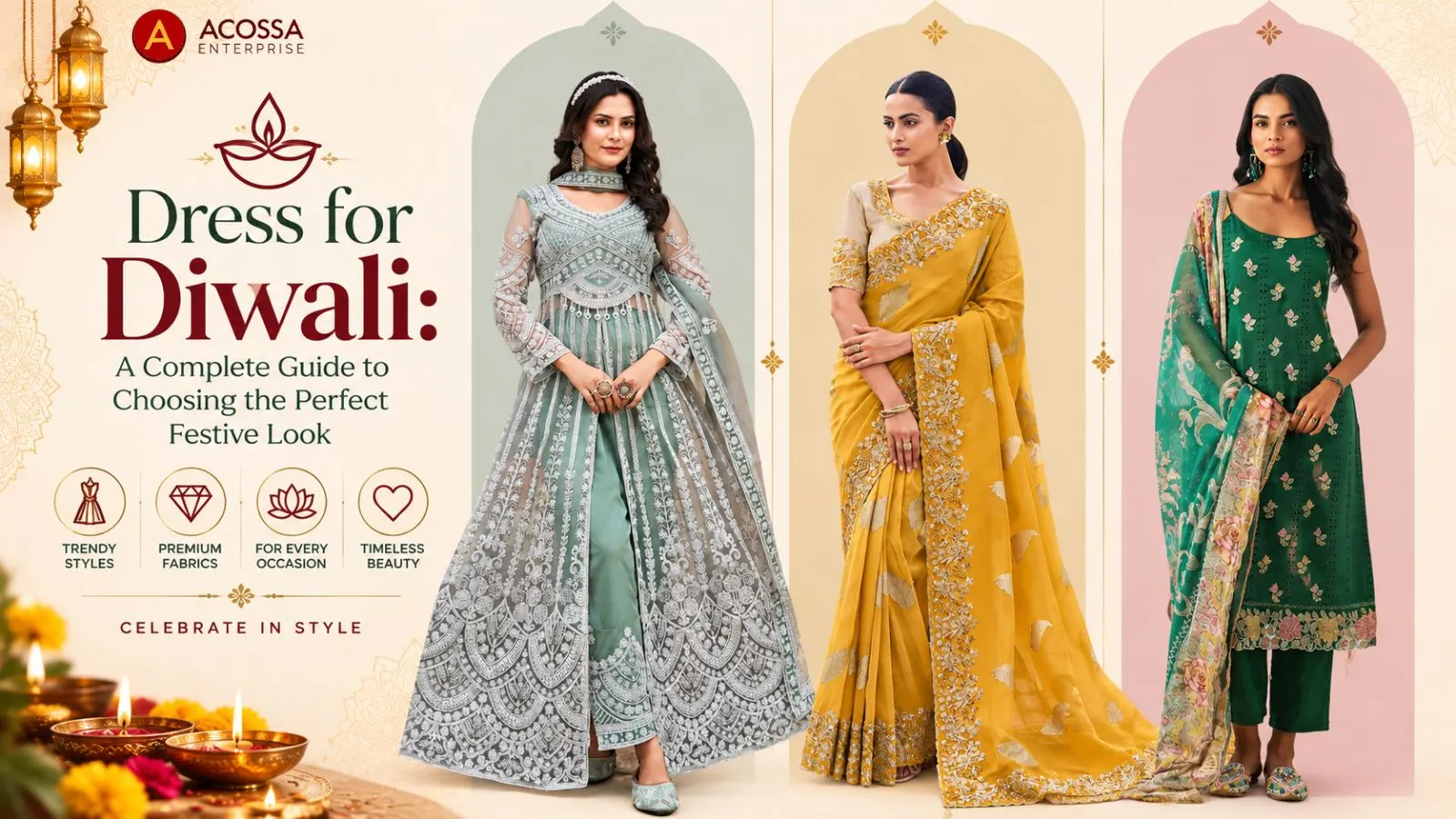
Dress for Diwali: A Complete Guide to Choosing the Perfect Festive Look
Diwali is a festival of light, family and celebration and for many of us it starts with one small question: what am I going to wear? The right outfit should make you feel beautiful but it also has to work for a long day of puja, visitors, photographs, food and often a late evening of celebrations.
This guide will take you through how to choose a Diwali dress that is appropriate for your occasion, your personal style, your comfort requirements and the weather, without buying more than you need.
Looking for a stylish festive look? Check out our saree collection
Select the Perfect Dress for Diwali
Before you start browsing designs, ask yourself some honest questions. These simple filters save time and prevent buyers remorse.
1. Begin with the occasion
Diwali is seldom one event. You might attend a morning puja, entertain relatives in the afternoon, go out for dinner and unwind the evening at a party. Each setting has a slightly different level of dressiness that’s required. Choose the event that is most important to you or if you need one outfit that can carry through the whole day.
2. Be aware of your personal style
Some women love traditional, heavily worked pieces. Some prefer clean lines and minimal detailing. Dress in clothes that make you feel like you. A festive look based on heavy dupattas will feel more like a costume and not a celebration, if you don’t wear them ever.
3. Comfort First
Long days of celebration. You will sit on the floor for puja, bow to elders' feet, walk around, serve guests and maybe dance. “Make sure you can sit, stand and move easily in the outfit before you commit to it.
4. Think about the weather
Diwali falls in the transitional period of autumn and the conditions vary according to the region. In many parts of India, the days may still feel warm but the evenings become cooler and in some parts it may be humid. Layer-friendly, breathable options are usually the safest choice. Don’t assume, check your local forecast for the week of Diwali.
5. Determine your level of embellishment:
Heavy work looks dramatic but can be heavy to wear. A simple rule: the more time you’ll spend in the outfit, the lighter it should feel. Save your most ornate piece for the shorter evening event.
Holiday Outfit Ideas and Where They Look Best
Here are the most popular diwali outfits for women, with honest notes on where each tends to work well.
Lehenga Choli
The classic celebration outfit is a lehenga choli, with a flared skirt, fitted blouse and dupatta. It's perfect for festive dinners, parties and larger family occasions when you want to make a statement.
Best for: evening parties, family gatherings, celebrations
Remember: If it’s a very heavy, voluminous lehenga, it can get tiring for a long day. If you’ll be moving around a lot, look for lighter fabrics and a softer flare.
Anarkali (film)
The Anarkali is a long flowing kurta with a fitted top and flared from the waist. It is one of the most versatile choices for festive dressing and many women find it flattering and easy to wear.
Best for: puja, family get-togethers, festive dinners
Remember; the longer styles make you look elegant, but watch the hemline so you can walk and climb stairs.
Sharara
A sharara set consists of a kurta or short kurti and dupatta paired with wide-legged, flared bottoms. It has a festive, slightly retro charm and the flare gives it plenty of movement.
Great for: get-togethers, dinners, nites when you want to dance
Note; the extra fabric at the bottom can be warm so pick a lighter material if it is a hot day.
Sari
A saree is still the perennial answer to what to dress for Diwali, as it is for puja and traditional family occasions. Depending on the fabric and the border work, it can be as simple or grand as you want.
Best for: puja, family rituals, formal parties
Remember: if draping is not your thing, practice before or choose a pre-stitched style so you will feel secure all day.
Modern Ethnic Dresses
Dresses in a fusion style; co-ord sets, kaftans and kurta sets with a straight cut and modern touches provide a lighter, easier route. If you prefer a relaxed festive look or want an outfit that you can wear again after Diwali, they can be a great fit.
Best for: Day visits, casual get-togethers, office diwali events, travel
Don’t forget to add statement jewelry or a rich dupatta to elevate the look for evening.
An Occasion Fast Guide
Anarkali, saree or a simple kurta set in soft breathable fabric. Diwali puja. Comfortable, easy to sit in and modest.
Family gatherings: Anarkali, sharara or a lightly embellished suit set for easy movement and comfortable hosting.
Festive dinners: sharara, lightly worked lehenga or a modern ethnic dress with elegant detailing.
Parties: lehenga choli, embellished saree or a bolder sharara with statement accessories.
Celebrations, be it office or casual: contemporary ethnic dresses and co-ord sets in easy fabrics.
Navy Blue Faux Georgette Sharara Suit | Sarara Dress Party Wear
Selecting Festive Colors
Diwali is a festival of warmth and light, and so many women gravitate toward rich, luminous shades. Forget the rule. Choose colors that complement your skin tone and the mood of your event.
Warm jewel tones – maroon, emerald, deep pink and royal blue – feel celebratory and photograph beautifully.
Golden and mustard shades reflect the glow of diyas, and go well with traditional jewelry.
Soft pastels such as blush, mint or powder blue are good for daytime and puja especially if you prefer a gentler look.
Classic reds and oranges have a festive, auspicious feeling for many families, but they are a choice, not a must.
For festivals , some people wear black and other dark shades and some avoid it , depending on family customs . If you are unsure, ask the elders or go with your household’s preference.
An easy way is to pick one main color and build the rest like dupatta, jewelry and footwear around it.
Mirror Work and Embellishment Embroidery
The festive wear is special because of embellishment, but more is not always better.
Zari & Thread Embroidery: Traditional & Elegant. Fine, well-made work looks polished without weighing down the outfit.
Mirror work: the light hits it like a dream, so it’s perfect for a festival of lights. Make sure it is safely attached and does not scratch or catch on fabric.
Sequins and beadwork: great for evening looks, but can be itchy or heavy. Check the lining and inner finish.
Gota patti and border work: a stylish way to add festive richness in a light weight way.
If you want to wear the outfit again, go for more subtle embellishment. A one-focal-point piece, such as a rich neckline with a plain skirt, is often easier to restyle later.
Fabrics What To Look For
It’s not five minutes, it’s five hours, and it’s fabric that determines how an outfit feels.
Cotton, silk and chanderi: Light, with a soft festive sheen. Great for day wear.
Georgette and chiffon These are light weight flowy fabrics and work well for
Anarkalis and shararas. If you opt for a sheer option, make sure you get a good lining.
Silk and silk blends: traditional for puja and formal occasions. They may feel hotter in humid weather.
Crepe: drapes beautifully, usually easy to work with.
Velvet is rich and dramatic, better for cooler climates and evening wear.
Net: Commonly used for dupattas and overlays. Make sure the inner lining is soft.
Whatever you decide on, check the lining. A well-lined garment feels softer against the skin and hangs better.
Silhouettes & Comfort Fits
Silhouette is about shape and the best one is the one you can wear all evening comfortably.
The ease of movement and festive look are provided by the flaring silhouettes (Anarkali, sharara, lehenga).
A straight cut set is clean and simple, great if you want to keep it minimal.
A-line styles balance structure and comfort, and flatter many body types.
You can drape sarees in different ways depending on how comfortable you feel.
For fit, ensure you can raise your arms, sit cross-legged if your puja requires it, and breathe comfortably after a meal. If you need any tailoring done to your outfit, make sure you leave yourself enough time before Diwali, as tailors are often busy in festive weeks. At Acossa Enterprise we recommend that you check size details carefully and choose the fit that allows you to enjoy the day, not adjust your clothes all evening.
Bottle Green Sharara Suit | Sharara Suit Design
Styling: Hair & Makeup, Jewelry, Shoes, Handbags
The look is finished off with accessories. The general principle is to make one element stand out and the rest balanced.
Jewelry
Keep jewelry light when wearing a heavily embroidered outfit. Often a pair of small jhumkas or a delicate necklace is all that is needed.
A statement necklace or bold earrings can top a simple outfit.
Opt for lightweight pieces if you’ll be wearing them for hours.
Shoes
Juttis and mojaris: Traditional, work well with almost any ethnic outfit and easy to walk in once broken in.
Block heels or wedges: They’re more stable than thin heels for long occasions.
Embellished flats: a good option when comfort is critical.
Break in new footwear before Diwali so that it doesn’t give you blisters on the day.
Bags
A small potli, clutch or embroidered sling bag will do. Choose one that works for your essentials, like your phone, lip color and keys, with a metal tone or color story that coordinates with your jewelry.
Hair Styles
Loose waves or soft curls complement sarees, Anarkalis and contemporary dresses.
Flowers in a neat bun or braid are practical for puja and look graceful too.
When you want your hair off of your face without looking too structured, half-up styles are great.
If you are near diyas or fireworks, tie up or clip long hair for safety.
Make-Up
Goal: a lasting glow. Often, a lightweight base, defined eyes and a lip color to match your outfit are enough. Festive looks are all about kajal and a soft highlighter. Choose products that suit your skin type and don’t experiment with a new product on the day of Diwali.
Emerald Green Organza Tissue Party Wear Designer Saree
Diwali outfit checklist
Use this before you close your dress for Diwali.
Fit.
I am able to sit, stand, bend and lift my arms easily.
The blouse or top is not too tight after eating.
It's the right length for my shoes and I won't trip over the hem.
Comfort
The fabric is appropriate for the weather I will be celebrating in.
The inner lining is so soft and gentle with my skin.
Embellishments won't scratch or catch.
Fabric & Care
I know how to dry-clean or wash the outfit.
I've inspected for loose threads or stitching problems.
The dupatta does not require constant adjusting to stay in place.
Add-ons
The jewelry is a nice addition to the outfit and it is not too heavy.
The shoes are broken in and comfy.
My bag is small, but it has my essentials.
General coordination
The colors work together.
The statement is made by only one element, be it an outfit or accessory.
I've done the full look, outfit to footwear, at least once before.
Looking Ahead
If possible, shop a few weeks before the festival. This gives you time for delivery, alterations and trying on the full look. Keep a backup plan also, like a simple kurta set, in case your first choice doesn't fit in the expected manner. When you are shopping for diwali outfits for women, bookmark your favorites first and then compare them to your checklist, rather than impulse buying.
Navy Blue Net Palazzo Suit | Palazzo Sets India
conclusion
The best Diwali dress is one that is suitable for your occasion, comfortable to wear throughout a long day and reflects your own style. Consider the event, the weather, the fabric and the level of embellishment and then create your look with thoughtful color and accessories. Festive dressing is not about rules, but about feeling confident and comfortable when celebrating with your loved ones.
On behalf of the entire Acossa Enterprise team, we wish you and your family a bright, happy and beautifully dressed Diwali.
Frequently Asked Questions (FAQs)
1. Which is the best dress for Diwali pooja?
Go for a practical option like a comfortable Anarkali, saree or simple kurta set in a breathable fabric. Since the puja often involves sitting on the floor, go for outfits that facilitate easy movement and decent coverage.
2. Diwali color to wear?
No required color. A lot of women prefer warm, rich shades like maroon, gold, emerald or pink. Select a color that is good for you and good for your family’s traditions.
3. Can I wear lehenga during day?
Yes, especially a lighter one in a soft fabric with a little embellishment. Very heavy lehengas are more comfortable for evening functions.
4. If you are looking for comfort, what is a good outfit to wear on Diwali?
The straight-cut kurta sets, cotton silk Anarkalis, co-ord sets and the modern ethnic dresses in lightweight fabrics are generally easy to carry for long hours.
5. How do I select the right fabric for Diwali?
Match the fabric to the weather and length of time. Lighter fabrics such as cotton silk, chanderi or georgette tend to be comfortable while heavier silks and velvet are better suited for cooler evenings or shorter events.
6. How do I reuse my Diwali outfit after the festival?
Look for pieces with subtle embellishment or versatile colors and style them differently. For instance, wear an Anarkali with plain jewelry for a family lunch or a dupatta with a different set.
7. When to buy your Diwali dress?
Ideally a few weeks ahead, so you have time for delivery, any tailoring and trying on the whole look with accessories.